The
Perimeter Project, Part I:
Fragile Lands Protection
Using Cemetery Zoning and Creative Memorialization
"Not marble, nor the gilded monuments
Of princes, shall outlive this powerful rhyme;"
William
Shakespeare, Sonnet #55
Sandra L. Arlinghaus
Adjunct Professor of Mathematical Geography
and
Population-Environment Dynamics
School of Natural Resources and Environment
The University of Michigan
and
William E. Arlinghaus
General Manager
Chapel Hill Memorial Gardens
Grand Rapids, Michigan
Associated
Google
Earth file for interactive viewing: download.
The file
to download
will remain more current (as it is updated)
than will the static images
below that were drawn from it in June of 2009.
General
Vision
The world's
most environmentally fragile lands
are in
critical need of protection. Many
of
these lands are coastal (hence, "Perimeter" Project);
many are in
developing nations. Often
these lands have
great natural scenic
beauty and are therefore prized targets for
real-estate developers. Zoning
is a strong way to control land uses;
zoning, however, can be changed by local municipal
authorities in
response to
short-term fluctuations in the economy and political
agendas. The most
immutable zoning category in most
countries of the world is one that is placed on the
lands where the
dead are
buried. Cemetery zoning offers the best protection for
land as well as
for people.
Cemeteries in
the U.S.A. have trust funds in
place for
perpetual care and maintenance of cemetery lands. This
feature, itself, makes the zoning the most desirable
with
regard to protecting lands. Despite
zoning
and trust-funding practice, much of modern American
burial
practice
actually harms the land: embalming
fluid,
steel, copper, bronze, hardwood, and reinforced
concrete, are
typically
buried along with the body. What
we
seek, in the broader "Perimeter Project" is to create
a coastal rim
of the world's fragile lands protected by trust-funded
cemetery status
AND by
environmentally sensitive burial practice. What
we describe in
Part I of a series of essays and their implementation
is a pilot
project currently underway as a first step toward this
"General
Vision." The entire project, as envisioned at
the outset, is one
of global proportions and is one that will unfold over
many years
Contemporary
Burial Practice in the USA
Burial of the
embalmed body in a casket, inside
a vault,
inside the Earth, seems to offer a sense of permanence
and security to
loved
ones. Burial is also a
consistent form
of handling the body within many western religions. Monuments, marble or
otherwise, marking the location of
the burial have become
standard. Memorialization
of the life is
etched in
stone.
In recent
years, cremation has become
increasingly
acceptable. It often
appeals to those
who worry about environmental sensitivities associated
with putting
embalming
fluids, metals, hardwoods, and concrete into the
ground. Cremation does
little, however, to improve
the ground. So-called
"green" or "natural"
burial, which is "new" within contemporary US culture
is both
environmentally sensitive and good for the earth. A
naturally decomposing human body inside a shroud or a
biodegradable container, buried within the Earth,
continues to
contribute for a
number of years to the welfare of the land and the
vegetation. From an
environmental and from a marketing
perspective, this form of environmentally sensitive
burial is the best. Often,
however, there is no memorialization
associated with either cremation or green burial.
Green burial,
while it may be "new" to many
Americans, certainly is not a new idea.
It
is, in fact, the oldest form of burial.
How
then, did we get involved in this unnecessarily
complicated approach,
one might
ask? The answer is
"Marketing"--make
people
believe
blindly that this form of ceremony is the "proper" way
to handle the
death of a loved one. What
marketing
can do, it can also undo. The biggest marketing issue
in the USA
separating
current from environmentally sensitive burial practice
is that of
memorialization.
|
Summary:
The merits and drawbacks of three
forms of body
management after death
- Contemporary
US
burial practice
- Merits
- Offers
a
permanent, trust-funded physical
memorial--marble tombstone, for
example.
- Fits
with many
conservative prevalent US religions
- Drawbacks
- Harms
the land in
terms of the chemicals/metals it
places in the Earth
- Gives
nothing
back to the Earth while occupying its
parcel of land
- Horizontal
burial
orientation (as the default mode in
many cemeteries) maximizes
footprint on the land
- Cremation
- Merits
- Does
not harm the
land
- May
make no
demands for a parcel of land, if ashes
are scattered; minimal otherwise.
- Drawbacks
- Has no
permanent
memorial if the ashes are scattered;
generally, only a group memorial
otherwise
- Does
not fit with
many conservative prevalent US
religions so that near-universal
adoption
is not an option
- Cremation
is
unappealing to many.
- Green
burial
- Merits
- Does
not harm the
land
- Does
give back to
the Earth while occupying its reusable
parcel of land.
- Vertical
burial,
as default orientation, would reduce
burial plot footprint
- Does
fit with
many conservative prevalent US
religions
- Marketing
advantage: Green
burial appears more
appealing than cremation and has none
of the problems of conventional
burial. It
has seen limited use in Europe
(particularly the UK and very limited
use in the US). This
option has many attractive selling
points--one goes on living by
fertilizing the soil and
protecting the
valued lands of the world." Preliminary
contacts with consumers suggest an 80%
approval rating of the idea.
- Drawbacks
- May
have no
permanent memorial.
|
Permanent
Memorialization: the Key to a Successful Pilot
Project
The table
above shows clearly that permanent
memorialization is the key to moving
from damaging
burial practice to environmentally sustainable
practice: either
cremation or
green burial. Cremation
has more
limited marketing potential than does green burial. Nonetheless, in Michigan
over the past ten years the
demand for
cremation has multiplied 10 fold.
What
is needed to take advantage of the more responsible
and indeed,
cheaper,
alternatives of cremation and green burial, in a
marketing climate that
is ripe
for these approaches, is a solution to the
memorialization problem that
comes
from the scattering of ashes and certain styles of
green burial.
A natural
answer to the lack of a permanent physical
marker
is to provide a permanent virtual marker
as a tribute and memorial to
the life
of an individual. We use
Google
Earth and contemporary electronic networks to archive
these markers in
space and time, in a tested format (since 2002), using
a
corporate structure that is already established in
imitation of
traditional
cemetery non-profit trust funding (Archived Memorials
Online: http://www.MyLovedOne.com).
Our current
pilot project is based on land
where we already have a foothold, in Grand Rapids,
Michigan.
Since January 1 of 2009, all sales of burial or
cremation include,
necessarily, a spot in a virtual trust-funded
cemetery.
Individual basic virtual markers are placed on the
Google Earth
site. The figures below show animated sequences
of screen
captures, or static shots (as appropriate), from
the Google Earth virtual cemetery for the Grand Rapids
site, which is
contained within the broader virtual cemetery linked
above.
The reader wishing to have the full experience, both
audio and visual,
must load the .kmz file into Google Earth and use that
as a browser.
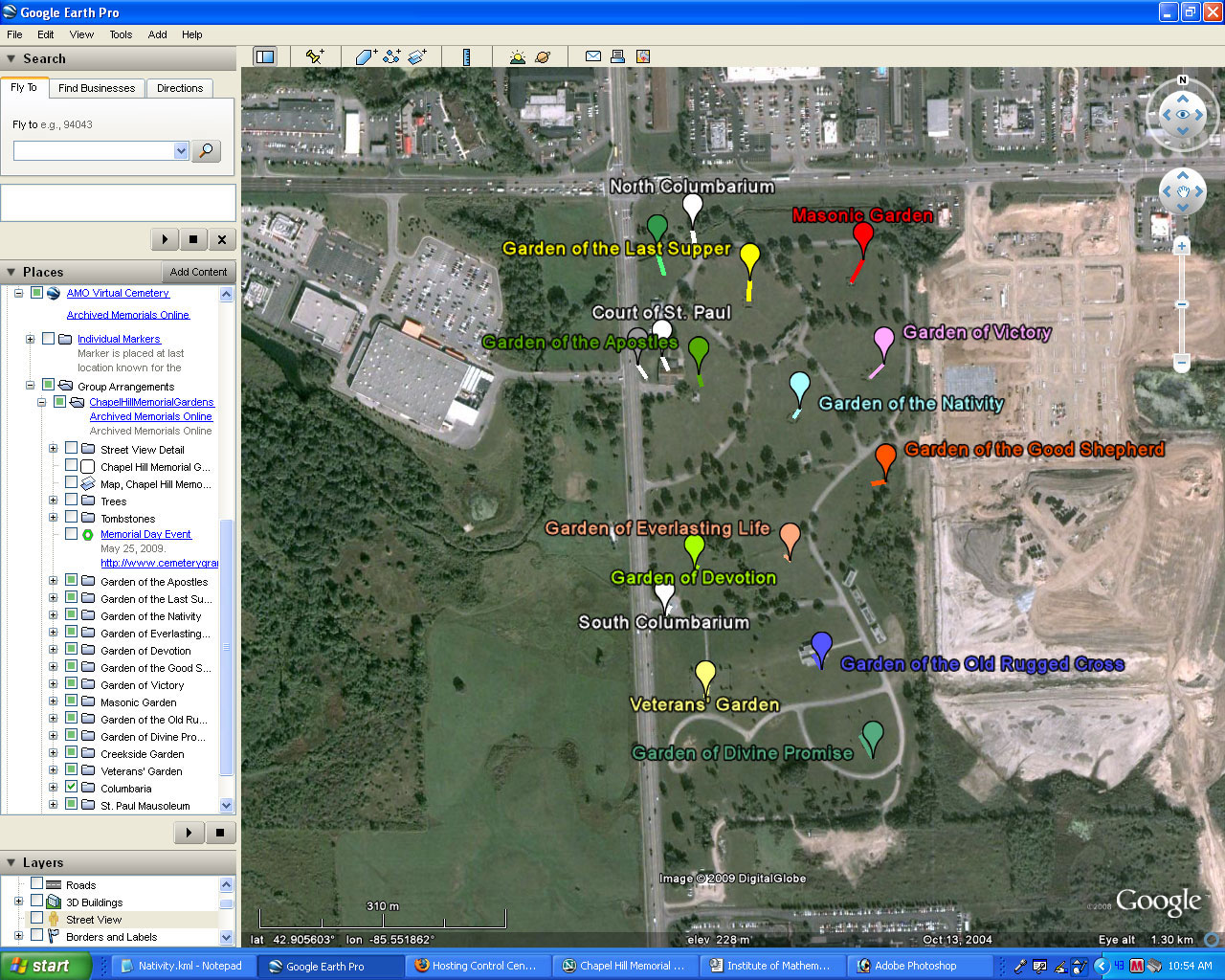
The first step
in creating an online virtual
cemetery is to locate it in Google Earth and mark
various broad
geographic components within it. Thus, in Figure
1:
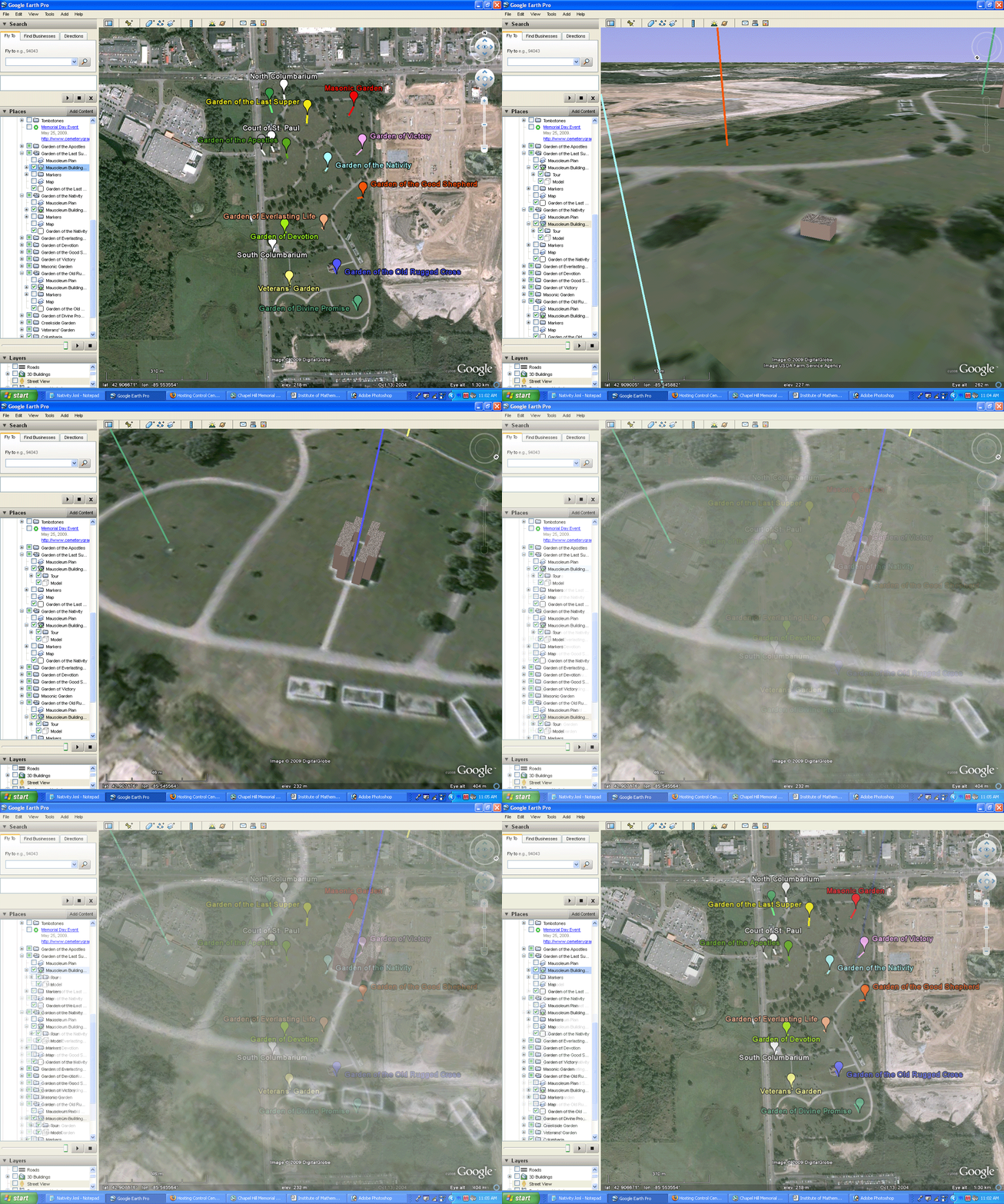
- Figure 1a: Placemarks
have been
added in Google Earth to show the locations of the
various Gardens
within the cemetery.
- Figure 1b: Chunky 3D
buildings
have been added, using Google SketchUp, to
represent mausoleums.
These buildings were then uploaded into Google
Earth and are correctly
geo-referenced there. To keep file size
manageable, the buildings
have been installed as "network links"; thus, one
must be on the
internet otherwise the buildings will not
load. As development
continues, photographic textures will be added to
the sides of
buildings and architecture will be modeled
according to photographic
evidence and field-checking.
 .
|
Figure 1b.
|
In
Figure 1b, it was
helpful to zoom in to see the virtual 3D simple
mausoleum structures
rise from the GoogleGlobe. What the zoom-ins
also showed,
however, was how plain the landscape appears.
Naturally, one
might wish a more detailed view. To overcome
this difficulty from
public streets and other public access, Google Earth
has a feature
called "Street Views" which shows camera views of
detail surrounding
the streets. On private property, such as in the
interior of a
cemetery, one must create such views from field photos
and then convert
them, using simple code, into computer files that will
show up in
Google Earth. These views may be presented on a
flat billboard,
on the inside of a cylinder, or on the inside of a
sphere. The
default set that comes in Google Earth presents local
panoramas within
spheres. At the present, we present added camera
views on
billboards. These ideas are displayed in a
visual sequence in
Figure 2.
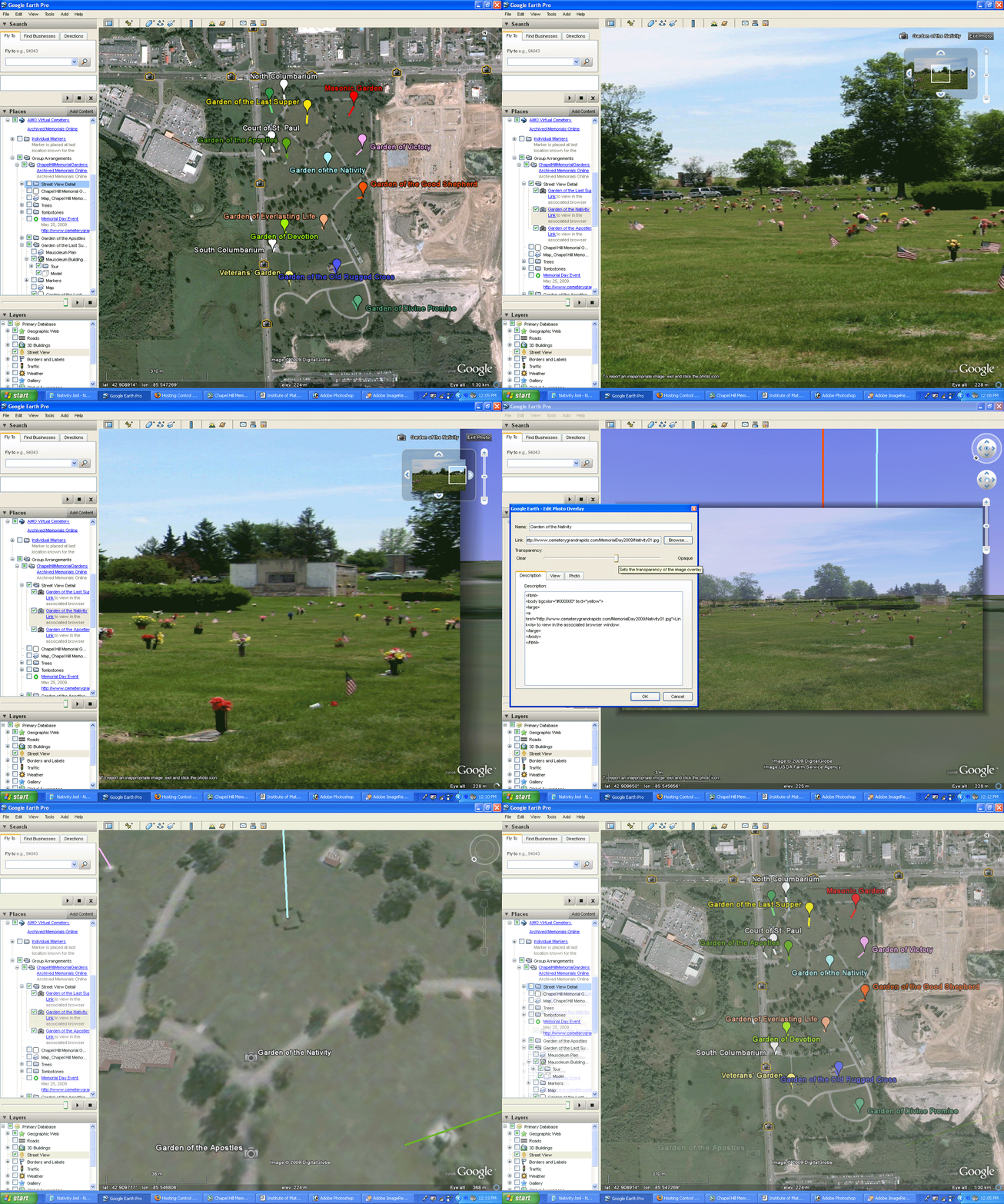
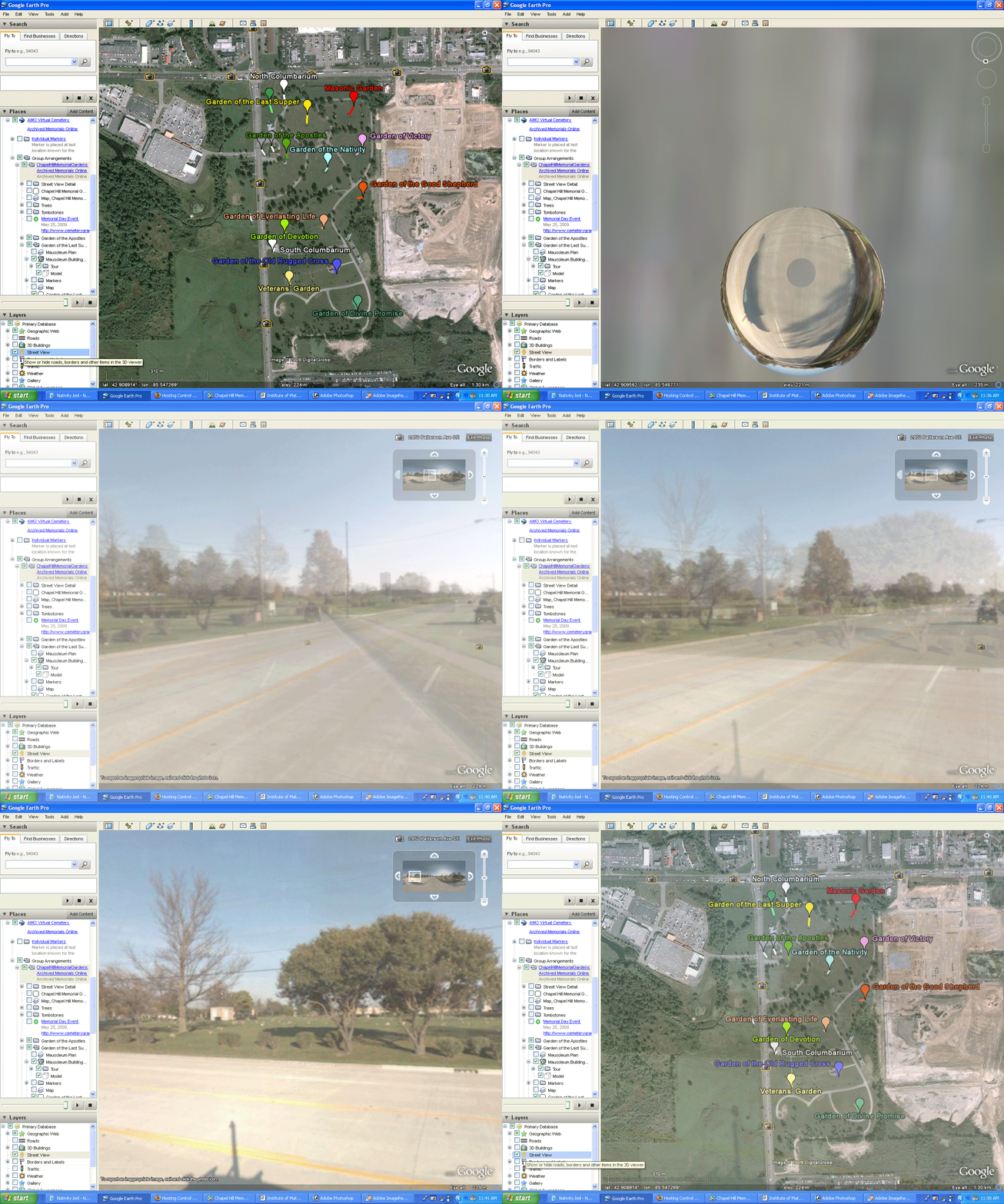
- Figure 2a: Clicking on
the
"Street Views" in the default loadset shows only
views of the cemetery
from the street.
<>Figure
2b:
Field photos were taken of selected elements of the
interior of the
cemetery. These photos were mounted on 3D
"billboards" to show
the detail as added street views. Because the
opacity of these
billboard views can be adjusted, one can check the
location of these
views against the chunky buildings as shown here for
the Garden of the
Nativity.
- Figure 2c: The code for
one
such billboard view (Garden of the Nativity).
 .
|
|
Figure 2b.
|
<?xml
version="1.0" encoding="UTF-8"?>
<kml
xmlns="http://earth.google.com/kml/2.2">
<PhotoOverlay>
<name>Garden of the
Nativity</name>
<visibility>0</visibility>
<description><![CDATA[<html>
<body bgcolor="#000000" text="yellow">
<large>
<a
href="http://www.cemeterygrandrapids.com/MemorialDay2009/Nativity01.jpg">Link</a>
to
view in the associated browser window.
</large>
</body>
</html>]]></description>
<Camera>
<longitude>-85.546913</longitude>
<latitude>42.910479</latitude>
<altitude>5</altitude>
<heading>132</heading>
<tilt>88.80375917000001</tilt>
<roll>0</roll>
</Camera>
<Style>
<IconStyle>
<Icon>
<href>http://maps.google.com/mapfiles/kml/shapes/camera-lv.png</href>
<refreshMode>onExpire</refreshMode>
</Icon>
</IconStyle>
<ListStyle>
<listItemType>check</listItemType>
<ItemIcon>
<state>open closed
error fetching0 fetching1
fetching2</state>
<href>http://maps.google.com/mapfiles/kml/shapes/camera-lv.png</href>
</ItemIcon>
<bgColor>00ffffff</bgColor>
<maxSnippetLines>2</maxSnippetLines>
</ListStyle>
</Style>
<Icon>
<href>http://www.cemeterygrandrapids.com/MemorialDay2009/Nativity01.jpg</href>
</Icon>
<ViewVolume>
<leftFov>-25.0019</leftFov>
<rightFov>25.0019</rightFov>
<bottomFov>-14.66</bottomFov>
<topFov>14.66</topFov>
<near>0.7</near>
</ViewVolume>
<Point>
<altitudeMode>relativeToGround</altitudeMode>
<coordinates>-85.546913,42.910479</coordinates>
</Point>
</PhotoOverlay>
</kml>
Figure 2c.
Code for camera
"billboard" view of the Garden of the
Nativity. |
The camera
billboard views of the interior of
the cemetery offer the driver a way to fix visual
benchmarks.
There is, however, often a need in navigating a real
cemetery to have
even more detail. Thus, we begin to incorporate
even more detail
in the virtual cemetery. In Figure 3:
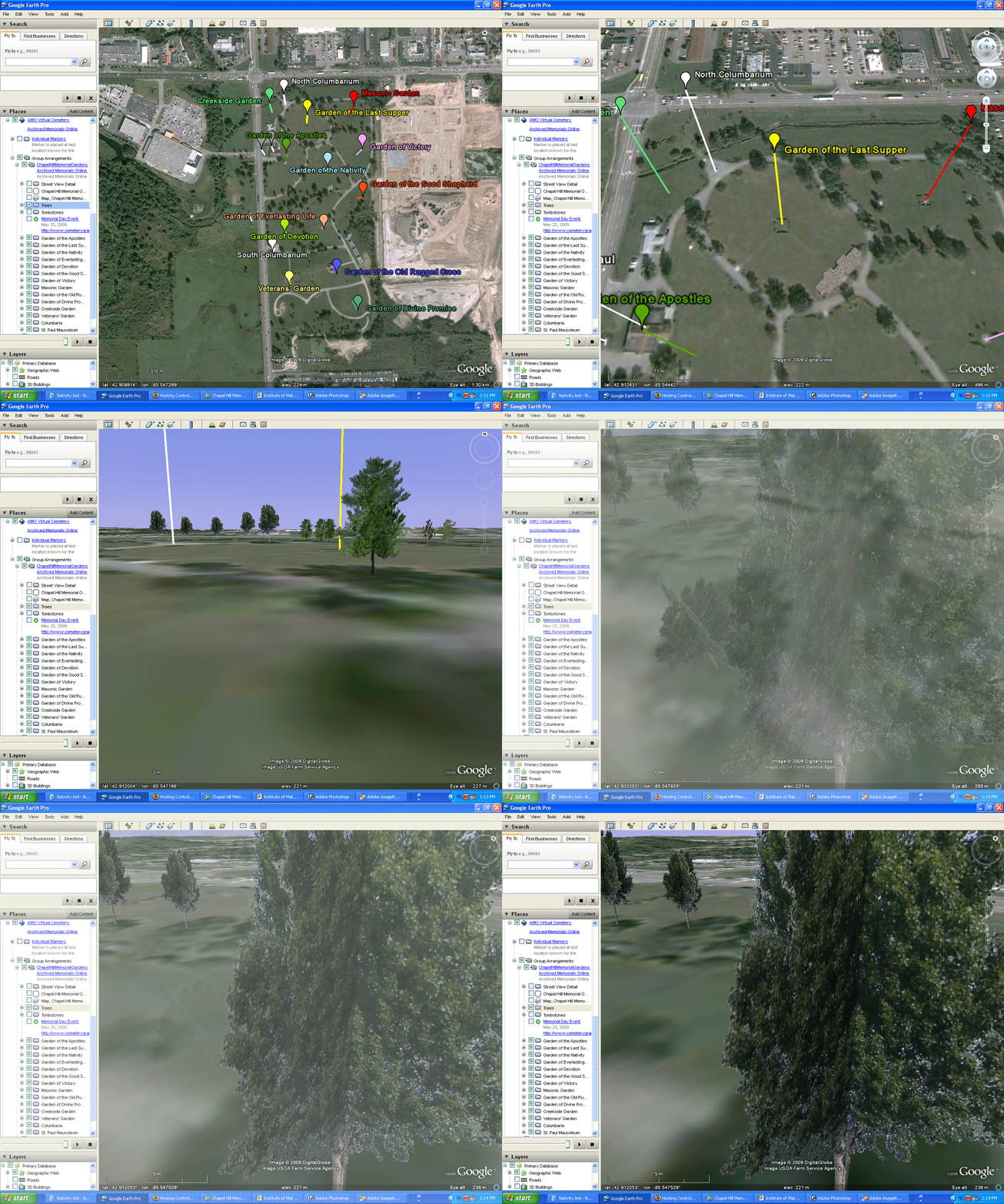
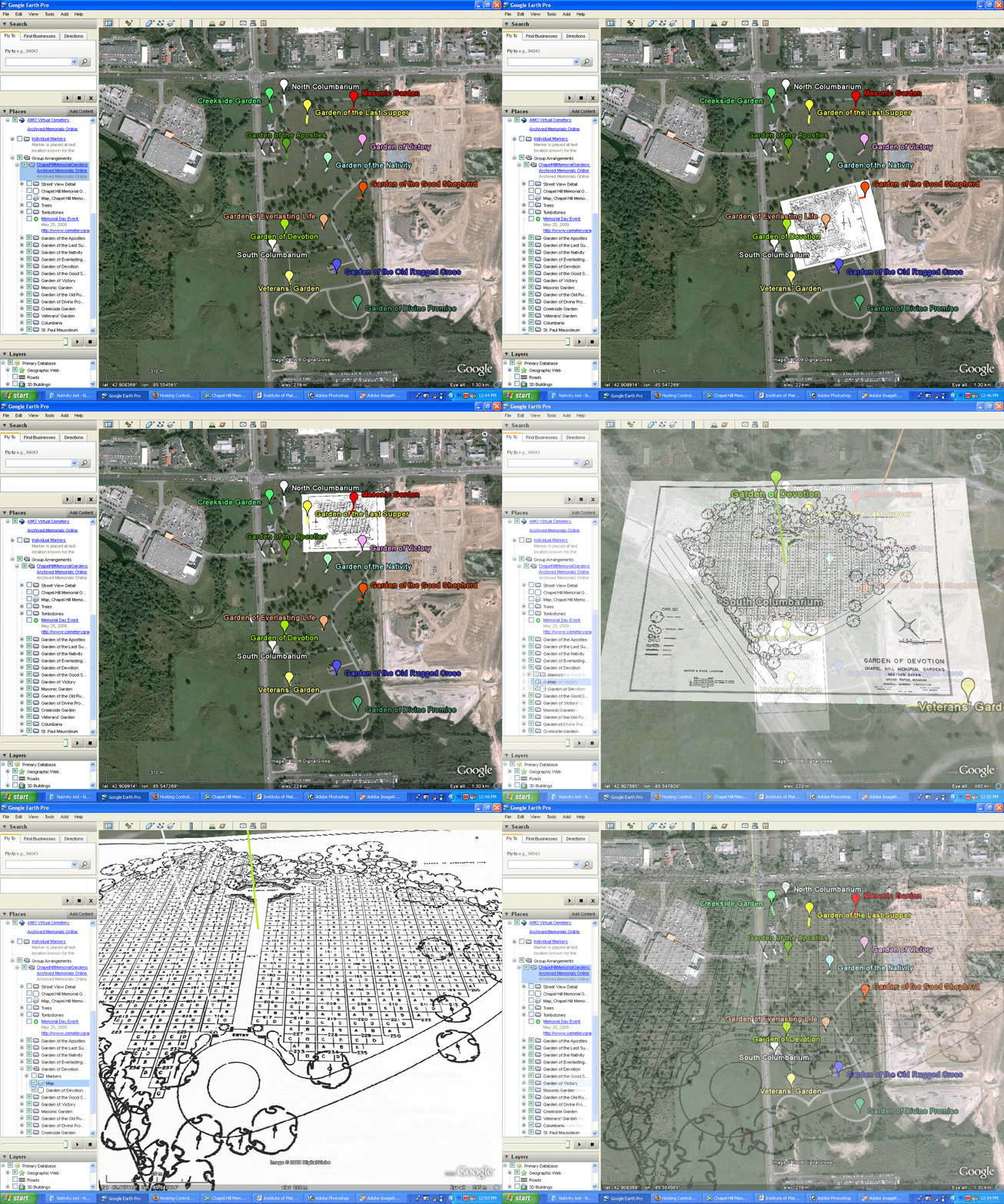
- Figure 3a: Maps of lot
locations are inserted in each Garden
- Figure 3b: 3D trees are
added. The Google 3D Warehouse has many
useful items of this
sort: trees, shrubs, flowers, and so
forth. To create a
fuller looking tree, select two copies of the same
tree and orient one
of them at 90 degrees to the other (or three at 60
degrees--but be
careful of increasing overall file size too
much). As above,
network links are used to keep file size
manageable.
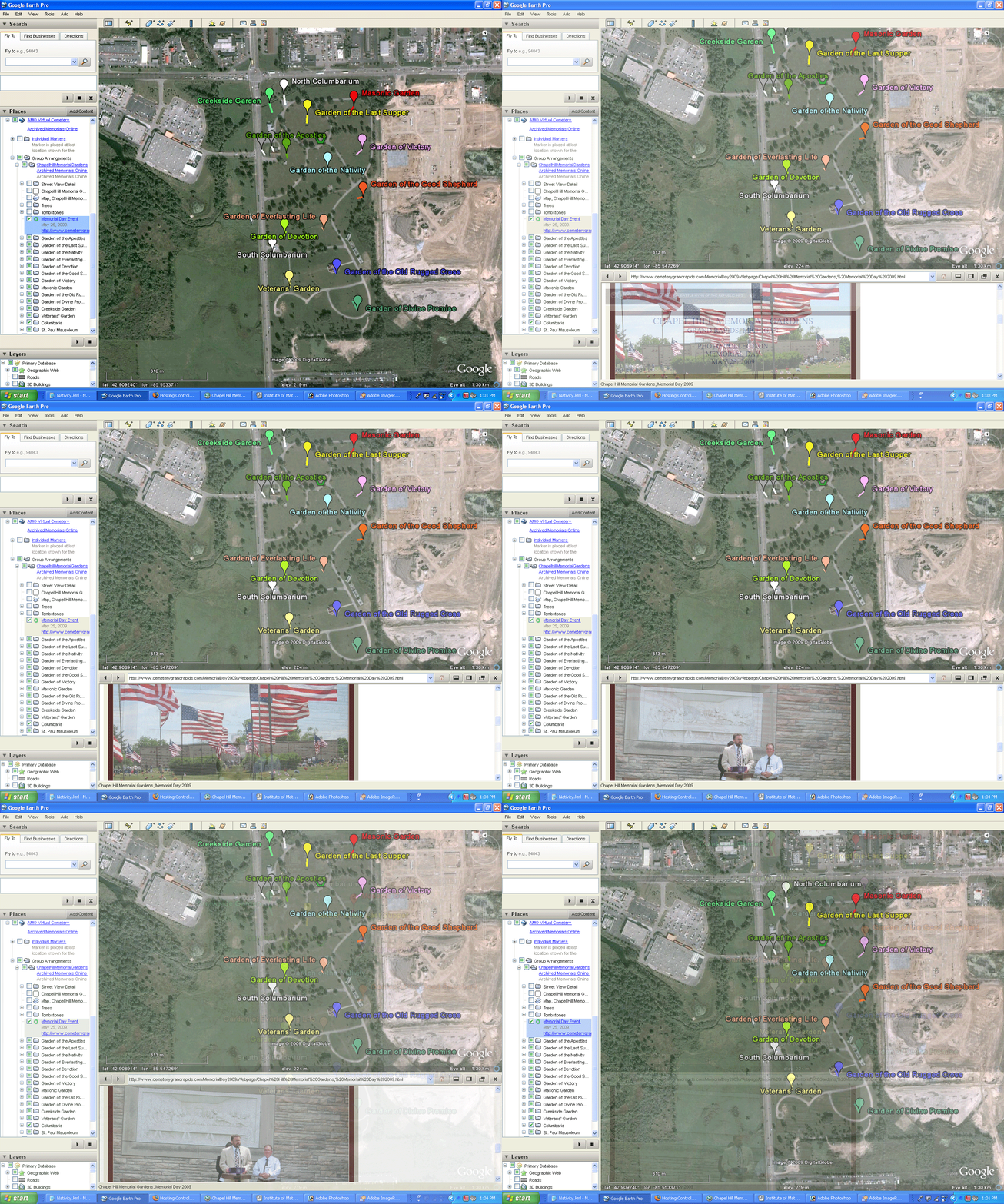
- Figure 3c: Special events
at
the cemetery can be kept alive. This figure
shows part of a
Memorial Day ceremony. Configure your
browser in relation to
Google Earth as you wish. We have chosen to
have it come up in a
frame at the bottom of the Earth in order to fit
all in a single screen
shot. In Google Earth, one can also listen
to the accompanying
music while watching the animation or while
driving around the virtual
cemetery.
 .
|
|
Figure 3b.
3D
trees offer a sense of realism when walking
around the virtual
cemetery. |
|
|
|
Solstice
was a Pirelli
INTERNETional
Award Semi-Finalist, 2001 (top 80 out
of over 1000 entries worldwide)
One
article in Solstice was a Pirelli
INTERNETional Award Semi-Finalist,
2003 (Spatial Synthesis Sampler).
Solstice
is listed in the Directory
of Open
Access
Journals maintained by the
University of Lund where it is
maintained
as a "searchable" journal.
Solstice
is listed on the journals section of
the website of the American
Mathematical
Society, http://www.ams.org/
Solstice
is listed
in Geoscience
e-Journals
IMaGe
is listed on the website of the
Numerical Cartography Lab of The Ohio
State
University: http://ncl.sbs.ohio-state.edu/4_homes.html
Congratulations
to
all Solstice contributors.
|
|